
How to find the right kind of help
Most management training is rubbish - or, at the very least, forgettable.
Out of the many hours I’ve sat through, there’s only one framework that I actively use. It’s so simple and so effective, I have brought it into every role I’ve had, and share it with every new manager and ambitious graduate I work with.
It’s called the SLII model (or Situational Leadership), created by the great Ken Blanchard (godfather of leadership training).
The overarching premise is that effective leaders match their style to the recipient’s development level. In other words, they give the individual what they need depending on their stage of learning.
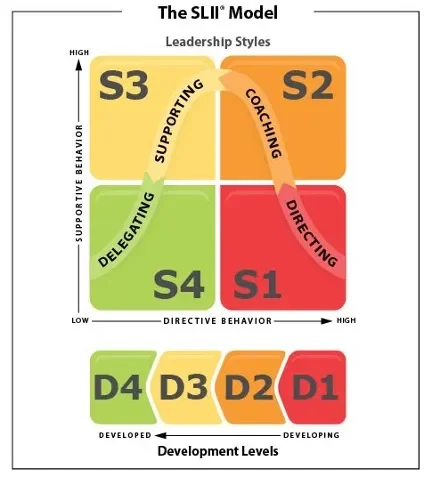
SLII Model by Ken Blanchard
I’m not a manager, why should I care?
The magic of this model is that it illustrates how everyone learns - the D1 to D4 section at the bottom. This is something we should be taught in school - the basic timeline of how we go from a novice to an expert.
Understanding where you are in the learning journey and what kind of support will help you get to the next stage may be one of the most empowering things you’ll ever learn.
Suddenly you don’t feel stupid or alone any more. You can relax, knowing this is just the process unfolding. And you can seek out the right people to help you on your way.
So, let’s get into it.
Stages of learning (or development)
Stage 1 (D1)
When you start any new task or activity, you’re an enthusiastic beginner. You’re excited by the challenge (high commitment), but you have no idea what’s involved (low competence).
What you need: a teacher - explicit instructions and close support, to keep you on track.
Stage 2 (D2)
The next stage is disillusioned learner. At this point, the full scale of the challenge is clear and daunting (low commitment) and your ability to meet the challenge feels shaky (some competence).
What you need: a mentor - someone to explain the options and offer encouragement to keep going.
Stage 3 (D3)
Eventually, you become a capable but cautious performer. You’ve got a lot better at the task/activity, your results are becoming more consistent (high competence), but your confidence in your own ability is still shaky (variable commitment).
What you need: a coach - space to discuss decisions and gain internal confidence.
Stage 4
Finally, you’re a self-reliant achiever. You know exactly what to do (high competence) and have the confidence to successfully navigate new scenarios (high commitment).
-> What you need: a pupil - someone else to teach, to deepen your expertise and open more opportunities for problem-solving.
As you were reading this, you might have twigged an important caveat for this model: it’s task-specific.
Just because I’m a self-reliant achiever when it comes to driving a car, it doesn’t mean I’ll skip the first three stages when it comes to writing a business plan.
Every new challenge starts the cycle afresh. The good news is that the more times you go through the cycle, the more transferrable skills you stack up, and (sometimes) the quicker you can make it through the hard stages 2 & 3.
So, what kind of help do you need?
If you’re here, my guess is you’re somewhere between disillusioned learner and capable but cautious performer. I feel for you - stages 2 and 3 can be tough.
Some days you’ll need a mentor to explain systems and decisions you don’t understand. Orthers, you’ll need a coach to hold space while you work it out yourself. Every day you’ll need cheerleading and positive challenge.
And that’s why I do what I do. I meet you in the dip, and use a combo of mentoring and coaching (which are very different skills, by the way) to help you out the other side, as you navigate the challenge of moving from uni to work.
High commitment, high competence. That’s the goal.
Then you can teach your friends ;)
As ever, reach out to me on LinkedIn to share your stories, recommendations and questions.
